meta pixel

core archive template

Improve the Success of Your ERP Implementation

Manufacturers experience a remarkable ROI when implementing an ERP. It’s trickier for Custom Machine Builders, though; they need to find an ERP that matches their workflow.

Key Takeaways

  • A successful ERP implementation starts with choosing a system that complements your unique workflow. It will provide full project visibility and show reporting metrics at all stages of a project. It should also help improve the quality of your parts and machines while minimizing project completion time.
  • Tips for implementing an ERP include staying within budget (including any implementation and training costs). An ERP consultant may provide helpful info and connections, but it’s vital to work with someone who understands your ETO needs. Including key staff while researching and comparing ERP systems is also important. 
  • Define success and schedule regular approvals with all departments at the beginning. This helps ensure everyone is on track and has no confusion or concerns.

Man frustrated at computer, trying to implement an ERP system

Have you heard any of those scary stories about ERP implementations gone wrong?

We have… a lot. Many Custom Machine Builders come to Total ETO after trying to implement an enterprise resource planning system that’s built for standard manufacturers. But you’re not standard, are you? Engineer To Order manufacturers are as unique as the machines they build, that’s why we love them.

ERP Systems are Valuable

There’s no shortage of evidence proving the value of an ERP system. However, hearing the stories of implementations gone wrong can cause an organization to ditch the idea altogether. Yet, you still need to streamline your business processes! Such opposing views make it difficult for a custom manufacturer to pull the trigger on finding an ERP solution, and rightly so.

Nevertheless, giving up is not the answer. Data from Nucleus Research found that for every dollar invested in an ERP solution, manufacturers received an average of $7.23 in return. Instead, custom manufacturers, especially Integrators, Panel Shops, and OEMs benefit from a little extra research in the beginning.

With the right ERP, a Custom Machine Builder can:

  • Track project workflow and see reporting metrics at all stages of a project. This empowers management with real-time information, significantly improving processes in sales and accounting.
  • Improve the quality of their parts and machines. It’s easy to ensure parts are inspected as well as record & follow up on quality issues for purchased parts with embedded non-conformance reports.
  • Improve project completion time by releasing the BOM to procurement in stages. Purchasing gets a head start with long-lead components. They can also issue and revise RFQs and POs with just a few clicks, based on changing BOM demand.

Tips for ERP Implementation Success

Good things come to those who wait… and you might need to wait for a few months. Typical ERP implementations are around three months long. We’ve had clients complete the setup in one month and others take several. Many factors play a part in the implementation time, including company size, the amount of time you dedicate each week, and even the software you’re integrating with, such as CAD or accounting.

One thing that all quick implementations have in common is a well-focused and motivated team. Automated Drive Systems, for example, had a speedy implementation.
When asked how they accomplished so much in such little time, President Brenden Fritz attributed it to his employees’ excitement. “When staff saw the improvements and how they’d benefit, everyone was on board”. Learn more about the quick implementation ADS had, including their first major wins with Total ETO, here.

TIP #1 Start with the Right ERP Vendor

This might sound like a given, but one of the most common reasons an ERP implementation fails is because the ERP software didn’t match the organization’s workflow. This is especially true for Engineer To Order (ETO) manufacturers. For those who make standard machines (the same design over and over), a standard ERP can do the trick.

The unique nature of Engineer To Order manufacturing, however, requires ETO manufacturing software as exceptional as their organization. Customizations can be made during most ERP implementations; it’s to be expected. Too much customization, though, is a problem. When an ERP solution isn’t a natural fit for an organization, it increases the time it takes to get the system up and running, as well as the costs required. Research from Panorama revealed that moderate customization in the range of 11%-20% is the sweet spot: anything above that could complicate and extend the implementation process.

TIP #2 Don’t Lose Sight of Your Budget

In the same report, Panorama Consulting found that average implementation costs were 3%-5% of the overall solution. Yet, 57% of ERP implementations still exceeded their budget. Be sure to include training costs in your budget and incorporate the opportunity costs your team may face. On average, the research shows implementation costs an average of 6.5% higher than the estimated budget.

Another way to control the implementation costs is to find an ETO ERP that includes training and implementation. It may sound too good to be true, but Custom Machine Builders do have an option that minimizes the expense and lends to the implementation projects’ success. Total ETO, for example, fits so well with Integrators, Panel Shops, and OEMs that human-guided training and implementation are included in the cost. 

After determining that an ERP is the right system for your organization, address implementation costs as soon as possible. If there’s true synergy between your organization and the ERP, it’s also in the best interest of the ERP to ensure a successful implementation. It’s rare when an ERP system will include the costs of implementation or training as Total ETO does, but they will still want to work with you to keep implementation within budget.

Be sure to include training in your ERP budget and discuss implementation costs before signing a contract.

TIP #3 Consider an ERP Consultant

When it comes to utilizing a different ETO manufacturing software system, knowledge is power. Consultants can be a great source of information and provide tips for implementation as well. The catch… if you’re Engineer To Order, then you need a consultant who specializes in ETO manufacturing. As we mentioned above, one of the trickiest aspects of buying and implementing an ERP for Custom Machine Builders is finding one that matches your unique workflow.

TIP #4 Include Key Staff when Researching ERP Systems

Employee resistance to change can be an obstacle during ERP implementations. A recent study from Deloitte shows 72% of employees resist change due to fear of job loss or increased workload. However, when your procurement manager, for example, is included when your team demos the product, they become excited about how efficient their department will be. Having full support from your team can reduce the time and costs involved in an ERP implementation.

Additionally, implementations are often improved when there’s a project champion. Someone within your organization who’s motivated to keep the project on track. This should be a full-time member of your team and/or an employee who has been with the organization long enough to understand your current challenges and be motivated to overcome them. Not only does this improve your ERP implementation, it ensures you’ve fairly evaluated all features.

TIP #5 Keep Communication Open

Ironically, one of the benefits of an ERP system is improved communication within the organization and with clients. In the meantime, it helps implementation if the manufacturing team communicates clearly and often. Poorly structured communications lead to bottlenecks and we’ve seen momentum can make or break an implementation.  

TIP #6 Schedule Regular Approvals

A common reason for implementation failures is not getting the desired results from the ERP. A great way to avoid this hurdle is by setting milestones throughout the project. During each stage of approval, plan and test functions to confirm everything is performing correctly. Project stakeholders or department managers should sign off after each approval. Every time a milestone is checked and approved, you’re not only improving the implementation timeline, but your team will have renewed motivation for continuing.

TIP #7 Define Success

When you first considered using an ERP to improve your processes, you had a vision, probably several. You knew there were areas within your organization that needed improving. These could include:

  • Providing more accurate sales quotes.
  • Completing more projects in less time.
  • Increasing the quality of your final projects.
  • Improving sustainability while minimizing waste.
  • Reducing costs in procurement while improving your supply chain.

Keep track of your current challenges and your goals. These will be used to measure progress during implementation as well as the overall return on investment. Clearly defining your goals at the beginning sets you up for success. You’re more likely to select the right ERP in the first place and these goals will keep your team motivated during implementation.

Conclusion

Successfully directing ERP implementation challenges requires a strategic approach. Understanding your organization’s goals and aligning them with your team’s needs starts the project off on the right foot. Open communication between your team and regular check-ins help to keep the project moving forward. Specifying a realistic budget and time commitment keeps the project and the implementation team on track.

Need help navigating all the manufacturing software options? We can help! Book a demo today to get your team excited about the growth ahead.

Written by Jay Boychuk

How to Increase Production Capacity

The most effective way to improve production capacity is to reduce clerical work in engineering so your designers have more time to design.

Key Takeaways

  • Thanks to frequent change orders, difficulty tracking parts, and no effective way to collect and learn from data, efficient manufacturing is difficult for Custom Machine Builders.
  • Adding new staff should be the last option to increase production capacity. New staff increase operating costs and require resources such as office space, equipment, training, etc. Instead, reduce repetitive data entry and redundant paperwork to free up your current staff’s time.
  • Using an ERP designed for ETO manufacturing can increase your production capacity by creating more efficient manufacturing processes and speeding up the order-to-ship timeline.

How to Increase Production Capacity

Success in our competitive market is forcing every manufacturer to make their business more responsive to client demands. The pressure is on for better, faster, and cheaper solutions.  Efficient manufacturing, however, is particularly difficult for Engineer To Order companies, for several reasons:

  • Customers frequently request changes to the order during or even after the design process. This can extend the length of a project and procurement efforts.
  • Sales representatives need to quote projects as quickly and accurately as possible. This is problematic though, without tracking past projects and estimates to completion.
  • To meet delivery deadlines, engineering needs to “pre-release” components to procurement. This, however, requires special effort to manage the bill of materials interaction with purchasing.
  • The team often identifies areas where the design requires changes. Engineers then need to modify drawings as well as the Bill of Materials (BOM). Procurement will then need to adjust material orders.
  • Accounting, engineering, and purchasing departments are often weighed down by unnecessary clerical work.

These are just a few of the quirks that make Custom Machine Builders so valuable but so busy. While it may seem impossible, you can improve the level of service to your customers while increasing your production capacity. Furthermore, you can do so without adding staff!

With the right ERP, Custom Machine Builders can improve production capacity without adding staff. Such an ERP will be your most valued manufacturing software.

More Efficient Manufacturing

By streamlining your business processes, you’ll free up critical staff from clerical tasks to focus on income-generating work. Inherently, Engineer To Order companies have talented staff, often creative and passionate. Unfortunately, as most managers know, their key staff are burdened with significant clerical responsibilities. It’s common for Custom Machine Builders to see the potential to expand their sales but not have the resources to do so.

We know from our own experience as machine builders and see confirmation from Automation.com that “Engineers are highly paid professionals who suffer when performing repetitive functions, such as back-and-forth massaging and frequent manual design adjustments. Only with a good marriage of engineering and sales automation can ETO (Engineer To Order) manufacturers provide rapid responses and compelling quotes to customers”.

Usually, creating more efficient processes in your manufacturing requires additional staff or workspace. However, you can make improvements without these resources.

Would Hiring Additional Staff Help an ETO Manufacturer Grow

Increasing capacity by adding new staff should be the last option for a manager. New staff will immediately increase operating costs through hiring expenses, fees, and salaries. Additional staff will also require resources such as office space, equipment, training, and supervision.

Moreover, employees that don’t stick around can be costly. Even a successful new employee, particularly in key technical departments such as engineering and manufacturing, still requires many months of experience before they can be 100% productive. That’s why it’s recommended you improve and maximize your current resources before adding to them.

How to Improve Production Capacity

Freeing up existing staff from clerical duties is the most profitable option. Consider your engineering department. Designers typically spend 50% of their time reissuing drawings and rewriting BOMs. They need to communicate with purchasing, process change orders, issue lists, and reports. Meeting with sales and manufacturing adds to their day as well. Finding a way to free up even 25% of their time has the effect of increasing your engineering capacity. Your four designers now have the capacity of five experienced designers.

The impact of freeing up design capacity has a multiplying effect on your manufacturing capacity. For example, for many Custom Machine Builders, their shop staff is four times the number of designers. Increased engineering capacity results in more shop hours sold. This chain reaction increases company profits with a minimal increase in fixed costs.

The most effective way to improve production capacity is to reduce clerical work in engineering, so your designers have more time to design.

How to Reduce Material Costs

Speeding up the design process helps reduce material costs. Engineer To Order (ETO) businesses usually define the materials required after they get the client’s order. Because this is a creative process… and changes from the client do occur, it is not unusual for engineering to need more time than what was scheduled. This means that procurement has less time to buy the materials to meet promised deliveries.

Time constraints reduce or eliminate the possibility of price shopping. The procurement department could save significant amounts of money if it had access to the BOM sooner (and had time to solicit competitive bids). In a $10 million / year sales firm, spending $4 million in materials, a 3% gain (with competitive bidding) alone represents $120,000 annually. Here, you can start to see how valuable enterprise resource planning software or manufacturing software can be for Custom Machine Builders. It connects engineering to purchasing and the shop floor.

As Nate Hinks, former Director of Sales at Farason said: “Total ETO has streamlined our purchasing process and saved us the cost of one full-time purchasing agent”. Learn more about the improvements Farason experienced when integrating Total ETO with SolidWorks.

Another major consideration in efficient manufacturing is using your history to reduce new engineering. Implementing a system that allows staff to reuse information from prior projects can not be over-emphasized. The ability to quote clients based on similar past projects not only improves the accuracy of estimates but also reduces the time spent quoting and qualifying clients.

Simply said, estimating is the act of determining how much time and money is needed to complete a project. Recognizing that estimating is ultimately an attempt to predict the future helps you see that the more info you have, the better. Like any projection, the accuracy of the estimate improves with the availability of more data.

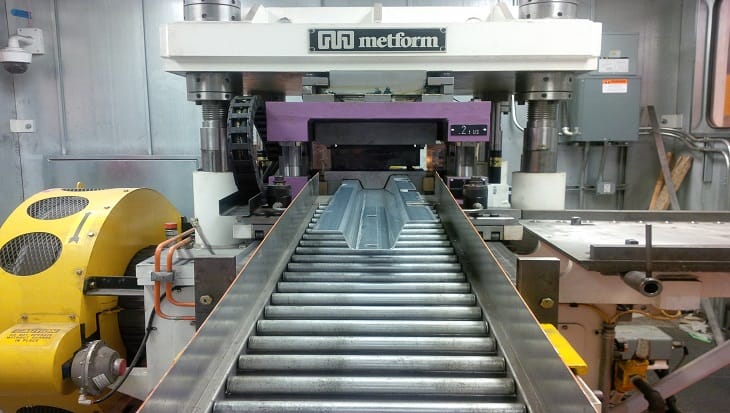
Metform are Engineer To Order and have benefitted from our ERP designed for Custom Machine Builders

Metform International has been providing roll-forming machines and coil-processing equipment for over 45 years. Purchasing & Logistics Manager Tom Hirschler started seeing the benefits of their sales team using an Engineer To Order ERP right away; “Total ETO has given us the tools to win bids successfully and become a worldwide competitor”. More details about the benefits Metform is still experiencing, including streamlined data and fast-tracked spare parts orders, are available in this success story.

A Bright Future for ETO Manufacturers

Many manufacturers are currently struggling and as we’ve learned, Custom Machine Builders are all too familiar with this battle. We can see though, that the right ERP (one that is designed for Custom Machine Builders) can be counted on to save time and money throughout an organization. The right ERP really can increase production capacity by creating more efficient processes in manufacturing. Additionally, this kind of manufacturing software can reduce the engineering work required and speed up the order-to-ship timeline.

Written by Taylor Dykstra

Building an ETO BOM

Due to its unique nature, an ETO bill of materials requires more documentation, customizations & adaptations than a standard BOM.

Key Takeaways

  • The first step to creating a BOM is a complete understanding of what the customer is looking for. In ETO manufacturing, customers are likely to make changes to the design and, therefore, the BOM, but paying close attention in the beginning can save changes in the end.
  • BOM creation in ETO manufacturing is more efficient when you have a good system in place for tracking parts. Don’t forget, though, your BOM should also include descriptions for each part.
  • BOM management is easier when working with Dynamic BOMs. They simplify the design, procurement, and manufacturing of each project and help ensure you’re able to ship on time and within budget.

A bill of materials (BOM) is to an engineer like a recipe is to a chef; it needs to be just right to create that perfect, unique final product.

Creating a BOM organizes the materials and subassemblies needed to manufacture a product. Thanks to details such as quantity, lead time, waste factors, etc, the BOM also improves project management.

The tasks involved are complex, and some best practices are necessary to ensure accuracy, efficiency, and a successful outcome. It’s also interesting to note that a bill of materials can vary greatly, from one organization to the next. In this article, we’ll explore creating and working with a BOM, particularly in the Engineer To Order sector.

Types of BOMs

Like most manufacturers, Custom Machine Builders face several types of BOMs, based on their function, structure, or configurability.

BOMs BY STRUCTURE

  • Single-level BOMs are a high-level view of the parts needed to assemble the project. Any subassemblies or blends are left out, as it’s just the finished components listed here. These BOMs are meant as a guide or where no additional processes are required downstream.
  • Multi-level BOMs are necessary for projects with multiple levels of assembly. In these BOMs, the first level is the parent item, with levels below, often known as “sub-assemblies” or “child-assemblies,” reserved for items that require additional work.

BOMs BY CONFIGURABILITY

  • A standard BOM is a fixed or static list; intended for use when the product being manufactured doesn’t change. There are no variations or options to customize. It is common for manufacturers to use such BOMs when their products don’t change.
  • A configurable or “matrix” BOM is typically used when there are modifications in a project. These variations may include a different size, color, or features. Most Engineer To Order manufacturers face changes like this regularly.

BOMs BY FUNCTION

  • Engineering (EBOMs) focus a lot on the product’s design requirements. Generated during the design process, they include a lot of detail. It’s a comprehensive list of assemblies and sub-assemblies which helps clarify the engineering/design team’s vision. For Custom Machine Builders, EBOMs can change a lot. ETO clients typically deal with a lot of change orders since they’re building original equipment. Working with an ERP that integrates directly with your CAD simplifies this process.
  • Manufacturing (MBOMs) focus more on specifying and supporting how a project will be built. Manufacturers assembling a project can find details on assemblies and components here. Some organizations also include the machinery needed throughout this process, including packaging requirements.

Why Engineer To Order BOMs are Different

ETO manufacturing is growing. Fast. The demand for customized products has never been higher. Concurrently, the need for better BOM management also continues to rise.

Several key aspects make ETO BOMs more unique and a little more difficult to work with.

  • Customization and Variability: When you make standard products, your BOMs are consistently standard. ETO projects require customization and adaptation. Not only are the BOMs different from one project to the next, but you’ll likely finish the project with a different BOM than you started with. This makes BOM management extremely difficult.
  • Engineering’s Involvement: Engineering is at the heart of ETO manufacturing. Their unique designs bring the client’s vision to life. Together, the client and the engineering department work with continuous back and forth, at every stage of the project. Without the right software or tools in place, this process takes a big toll on engineering.
  • Documentation and Traceability: When it comes to a standard BOM, documentation and traceability are pretty straightforward. ETO projects, however, require extensive documentation due to the rareness of each project. This is where BOM creation and BOM management can get tricky The Project Management Institute (PMI) has shown that more than 80% of ETO manufacturers struggle to maintain traceability in Engineer To Order projects.

Steps to Build and Manage an ETO BOM

Many organizations think the first step in creating an ETO BOM is the part name and number. That’s jumping the gun a little bit, though. The best first step to creating a BOM is a complete understanding of what the customer is looking for.

Product Understanding

Proper communication with your customers about their needs is an essential first step. According to McKinsey, when a product strategy fails, 70% of the time is due to not understanding the customers’ needs. Paying close attention to the entire customer journey makes it much more likely that your customer will return.

In Engineer To Order manufacturing, the customer is likely to change the design, even after releasing the BOM. These last-minute changes can cost time and money. The engineering team can minimize them, however, if they have a clear understanding of the desired outcome.

Plan a System for Part Numbers

Better BOM management means a TOTALLY better system to track parts. To improve identification, tracking, and even communication with your vendors, you need a part number. Giving a unique identifier to each component in the BOM is important. There are 2 approaches to numbering your parts.

  • A BASIC SEQUENTIAL SYSTEM: This approach works best for smaller projects. Some manufacturers unintentionally overcomplicate it, though, with too many digits. Think about all your different screws in the project being numbered like this – “000285”, “000286”… etc. If using a sequential system, shorten them by eliminating the zero’s at the front. This is not only more efficient, it also reduces the likelihood of errors.
  • AN INTELLIGENT SYSTEM: For larger assemblies, it helps teams to use letters representing the component. With this system, those same screws, for example, would label them as “SCRW285”.

Whatever system you choose, remember that the best bill of materials also includes descriptions for each part. This makes it much easier for humans to scan and helps distinguish between similar components.

Enter Data Early and Plan for Changes

Ideally, teams prefer to fully construct and approve a BOM at the beginning of a project. Engineering would be able to release it to procurement, who can order parts that all arrive on time, allowing manufacturing to assemble the project, in plenty of time to test and ship. That’s a big ask for any manufacturer, but especially difficult for ETO organizations.  

For Custom Machine Builders, clients typically request multiple design changes, even after releasing the bill of materials. These changes could include anything from drawing revisions to different or additional parts. By having standard procedures for change management, your team can keep a project on track.

Integrators, Panel Shops, and OEMs easily manage these changes in an ERP/MRP system designed for ETO manufacturing. The software should integrate smoothly with your computer-aided design (CAD) system. Doing so allows your team to track changes to the BOM, in real-time.

Material Specifications and Substitutes

You need detailed documentation for every component, including material specifications, dimensions, and other relevant information. While this is the best way to ensure consistency and quality, you’ll want a backup plan, too. It’s wise to account for potential alternates for as many items as possible. Being able to adapt quickly to shortages and supply chain disruptions can make or break a project.

Additionally, when considering the components required for each project, it’s recommended you consider their lead times too.  This is where working with a Dynamic BOM really comes in handy. They allow you the flexibility to release parts to procurement in stages. It saves each project time and money.

Test, Validate, and Assemble

Before signing off on the BOM, you may want to test and validate your design/BOM with a prototype. This is a good opportunity to ensure all the parts fit together and work as planned. This step can help ensure the manufacturing process will be executed without issues.

There are also times when detailed assembly instructions may be necessary. Those include instructions on the assembly prints that will help guide the manufacturing team through the build.

BOM Management

BOM creation, whether it’s an engineering BOM or a manufacturing BOM, a single-level or multi-level BOM; requires dedication and attention to detail. Thought and time are always needed to improve BOM management. It’s true, that working with Dynamic BOMs can simplify the design and manufacturing of custom machines. Dedicated BOM management is still necessary, though.

An ERP built for ETO companies will help many departments in your organization. Those working directly with the BOM, including engineering and procurement, see the most improvement.  To learn more, or to see Dynamic BOMs in action, book a demo. You’ll be glad you did.

Written by Stan McLean

Manufacturers are Increasing Profits by Reducing Waste

Key Takeaways

  • Production planning for ETO manufacturers is difficult because the design and BOM are in constant flux. That means engineering and procurement must deal with change orders at any stage of production.
  • Manufacturing waste typically comes from defects and rework, from a product not meeting quality standards. Unnecessary transportation also creates waste, including fuel consumption, labor, and more.
  • The best ways to reduce waste in ETO manufacturing include decreasing manufacturing downtime, making use of leftover parts, and adopting Lean Manufacturing principles.


Improving Manufacturing Downtime and Other Challenges with an ERP Business System

Manufacturers, particularly Engineer To Order (ETO) organizations, must constantly look for ways to reduce waste and increase productivity. It can be time-consuming, but when done properly, such changes mean increased customer satisfaction as well as increased profits.


Custom Machine Builders face some of the same challenges as repetitive manufacturers, including manufacturing downtime. However, they also have unique challenges, such as needing to release the BOM in stages. That’s why they need to consider an ERP business system to help. This article will explore ways for an ETO manufacturer to reduce waste and, therefore, boost profits.


What is Engineer To Order and Why is Production Planning More Complicated

Custom Machine Builders who typically manufacture new designs fall under the Engineer To Order title. These often include Integrators, Panel Shops, and OEMs. Many ETO organizations would like to have materials ready when manufacturing needs them. Unfortunately, production planning in ETO is not as easy as make to order (MTO) manufacturing.


In MTO, the manufacturer knows what they’re building in advance. Production planning and procurement are simple because the design and BOM are set. For Custom Machine Builders, though, the client comes to them with an idea and works closely with engineering to design a solution. Throughout this process, it’s common to spot areas where the design needs to be changed. It can, of course, be frustrating for engineering to modify the drawings and the BOM. It also means that procurement is tasked with canceling, changing, or creating new purchase orders.


It’s fair to say that Engineer To Order facilities have an erratic workflow. The team usually needs to source additional materials at any stage of a project. This typically causes bottlenecks, especially if you don’t have a proper ETO enterprise resource planning (ERP) system. Downtime in manufacturing is wasteful for both standard and Custom Machine Builders. Whether it’s due to maintenance or waiting for parts to arrive, the most evident consequence of manufacturing downtime is the decrease in production output. The Aberdeen Group released a report that shows standard manufacturers lose an average of $260,000 / per hour when they fall behind.


ETO manufacturers face a lot of change requests; one of the reasons production planning is more complicated for them. It's important to reduce manufacturing downtime.


ETO Challenges Need an ETO Solution

Many engineers, designers, machinists, and purchasers don’t realize that an ERP business system designed for ETO prevents most bottlenecks. There are hundreds of ERPs on the market, but unfortunately, most of them can’t help because they aren’t designed for custom manufacturing. An ETO solution, however, integrates with CAD, eliminating all double entry and redundant paperwork. Plus, when your team starts working with Dynamic BOMs, the bottlenecks that inevitably appear between engineering and procurement are prevented, saving both departments time and money.


Engineer To Order is also a relatively new production process. There are hundreds of manufacturers who don’t know yet that ETO exists. If you’re not sure whether you qualify or not, this free online quiz can help you determine if you are Engineer To Order.


How is Manufacturing Waste Created

There are a variety of processes and practices within a factory that lead to waste. Many are common among MTO manufacturers, such as overproduction. Producing more goods than needed, or earlier than needed, leads to excess inventory, which affects storage space and capital. Engineer To Order organizations don’t struggle with this, as they typically don’t build the same machine twice. ETO, however, does have other areas in its processes that can be wasteful.

  • Defects and Rework: When a product doesn’t meet quality standards, material and labor are wasted.
  • Transportation: Excessive movement of materials between production stages or warehouses comes with a risk of damage, fuel consumption, emissions, labor, and other logistics costs.


Waste Reduction for ETO Manufacturers

Recycling is awesome, but there’s a lot more to reducing manufacturing waste than the three R’s. The creativity and flexibility that ETO manufacturers offer make them unique and in demand. To thrive in such an environment, many Custom Machine Builders are learning they need to reduce waste. The following are a few good ways to get started.

1. Decrease ETO Manufacturing Downtime

When a plant stops wasting time, it significantly increases throughput and profitability. You likely already have an idea of how costly downtime is in your current manufacturing processes. A key factor in reducing downtime is ensuring materials are available when manufacturing needs them. However, ETO organizations face two obstacles here.


–        Long Lead Items: The earlier procurement can order materials, the better. An important factor in reducing downtime is ensuring purchasers can begin acquiring supplies and raw materials as early as possible. Engineers understandably want to wait until the entire design is finished before releasing the BOM. Ordering long-lead items early, however, is crucial to preventing delays in shipment.


–        Vendor and Supply Chain Disruptions: The supply chain has always been somewhat unreliable, but these days, “volatile” is putting it nicely. There are ways to help reduce the impact of the supply chain on your business, but without the help of a reliable business system to keep track of and manage priorities, it’s easy to fall behind. It’s also important to track your history with vendors. Knowing who you can count on or where to turn when you need a part expedited, could help prevent downtime in the first place.


A strong but time-intensive solution to the problem is shopping around. Long-lead items aren’t the only rationale for getting items through procurement quickly. The more time your purchasing department has, the more savings you can find by shopping around. You’ll also avoid rush delivery fees and scrambling to meet a deadline.


These bottlenecks between engineering and procurement are common for Integrators, Panel Shops, and OEMs. In fact, Total ETO built the original Engineer To Order ERP because of this specific struggle. We know exactly how frustrating it can be.


For custom manufacturers, bottlenecks between engineering and procurement can be their biggest struggle.


2. Make Use of Leftover Parts

Production planning and inventory management are complex in the ETO.. Engineer To Order manufacturers tend not to stock inventory, however, there always seems to be a collection of leftover parts from past jobs. Many organizations can see the value in tracking spare parts but aren’t sure how to do so efficiently. Without taking such steps to improve production, though, a manufacturer can end up with diminishing profits. With the amount of competition growing in our industry, Engineer To Order manufacturers need to do everything they can to trim waste, stimulate growth, and boost profits.


Additionally, it’s worth considering how much annual revenue your organization could realize by selling leftover parts to clients. That’s what Brenden Fritz, President of Automated Drive Systems discovered while implementing Total ETO. Learn how they reduced waste and increased profits in this case study.


3. Modular and Standardized Components

The terms “standard” and “Engineer To Order” are rarely used in the same sentence. However, there is potential to standardize components. By using standardized parts or subassemblies, ETO manufacturers can decrease lead times and inventory complexity. Research from the Massachusetts Institute of Technology (MIT) demonstrates the benefits of modular product architectures in reducing waste in ETO manufacturing.


4. Lean Manufacturing Principals

A valuable and proven method of reducing the amount of waste in manufacturing is Lean Manufacturing. A popular practice since the 1980’s, the principles of Lean Manufacturing transfer to ETO manufacturing as well. There are five principles including value, value streams, flow, pull, and perfection. Applying Lean concepts puts an ETO organization is a position to continually improve. Every project leads to greater efficiency, waste reduction, and increased profits.


One Simple Solution

Engineering and purchasing departments can see great results from an MRP or ERP business system that streamlines their processes. Total ETO is known for providing Totally Better efficiency, accuracy, and profitability to Custom Machine Builders.


Engineers prefer Total ETO because it seamlessly brings design work into a project. The software can integrate with popular CAD systems such as SOLIDWORKS and Autodesk Inventor. It can also bring the BOM in without leaving CAD and with no double entry. Other characteristics appreciated by many ETO engineering departments include:

  • Copying parts from a past project’s BOM to a new BOM.
  • Providing designers with the ability to calculate the BOM before making purchases.
  •  Eliminating bottlenecks by releasing parts to procurement in stages, including initial long lead requirements.


Total ETO also helps the purchasing department run more efficiently by making procurement simple through interconnected information with engineering, receiving, and the shop floor. Purchasing will also enjoy:

  • Saving time by grouping common parts or suppliers across multiple projects.
  • Adding POs and making revisions as changes occur, including revised delivery dates.
  • Reserving inventory by project and seeing remaining availabilities


It’s easy to see now why Custom Machine Builders have started reducing waste and saving money with Total ETO. The software is easy to implement and use, affordable, and backed by a team of industry experts with a passion for the success of every client. Learn more about the Total ETO solution here.


Written by Taylor Dykstra

How to Increase Throughput

Key Takeaways

  • To increase throughput, Custom Machine Builders need to take the entire production process into consideration. This includes acquiring raw materials to delivering the final product; and for ETO manufacturers, every change order that happens in between.
  • Common mistakes that affect throughput include inadequate planning, poor inventory management, quality issues, underutilized tech, inadequate performance monitoring, and inefficient communication/collaboration.
  • To improve your throughput, consider being more proactive with manufacturing software. Leveraging data is a great place to start. Then you’ll want to evaluate your current processes that will help show you areas where you can reduce downtime. If finding reliable data is difficult, consider an ERP software solution.


Improve Throughput

How to increase throughput” is a question a lot of manufacturers ask every day.


For Custom Machine Builders, flexibility and precision are of utmost importance. Integrators, Panel Shops, and OEMs face the same struggles that standard manufacturers deal with, as well as a few that are unique to them. That’s why every moment matters for Engineer To Order (ETO) manufacturers. The organization must maintain consistent throughput despite needing to adapt to fluctuating demand, supply chain issues, and other bottlenecks.


Throughput directly affects the success of each project and the company as a whole. So, we’ll discuss some of the biggest mistakes ETO manufacturers make that impact throughput. Then, we’ll explore some tips to help improve your processes. First, let’s examine why throughput is especially important for original equipment manufacturers.


Understanding Throughput in Custom Manufacturing

Technically, the concept of throughput is the same for manufacturers, regardless of building custom or standard machines. It’s the rate at which a company produces units within a specified time frame. Throughput takes the entire production process into consideration. From acquiring raw materials to delivering the final product, throughput measures the output achieved.


Custom Machine Builders, however, need to work a little bit harder to reach and maintain ideal throughput. Each project involves diverse product specifications and fluctuating orders. There’s also usually design changes that happen throughout the process, even after the BOM has been released to procurement. Each of these factors has the potential to negatively impact throughput.


Common Mistakes That Affect Throughput

There are a few common mistakes that ETO manufacturers make that impede throughput time. Consider each one and whether or not you can relate.


Inadequate Planning: Projects without a comprehensive production plan and schedule are often delayed. Without the ability to forecast demand accurately, or allocate resources effectively, bottlenecks don’t just happen, they compound.


Poor Inventory Management: It’s understandable why stock shortages would slow down a project, but excess stock can also cause problems. ETO manufacturers need to find a balance to prevent disruption. Many Integrators, Panel Shops, and OEMs struggle without the right data to plan with or learn from.


Quality Issues: Poor product quality often creates rework, or scrap. Either way, throughput time and production costs go up. Quality can also include inadequate production line maintenance. When machines or components fail, you’re no longer running at full capacity. Remember, scheduled maintenance creates less downtime than a breakdown.


Inefficient Communication and Collaboration: Effective communication throughout the organization is essential. For Custom Machine Builders though, engineering and procurement are the priority. Without the right tools to properly communicate and collaborate your throughput is negatively affected. This of course includes communication within your team but also with your clients and suppliers.


Underutilized Tech: Software and hardware are advancing so quickly these days, it’s understandable that organizations can’t keep up. However, failing to leverage these opportunities can limit throughput improvement. Investing in shop software, such as ERPs designed for ETO manufacturers or hardware, such as IoT-enabled sensors, will enhance overall performance.


Inadequate Performance Monitoring: For organizations that strive for continuous improvement, it’s necessary to continuously evaluate your processes. Collecting and utilizing data is much easier for standard manufacturers. Integrators, Panel Shops, and OEMs struggle to pull together reliable data. Being able to track project workflow, though, and learn from past projects will improve your efficiency, accuracy, and profitability.


Common mistakes Custom Machine Builders face with throughput include inventory management, quality, and poor communication.


How to Increase Throughput

Addressing these common mistakes and taking a proactive approach to increasing throughput presents your team with opportunities to improve. And you’ll be glad you did! Your efforts to increase throughput will make your organization more reliable and competitive. Below are a few great ways to start.


TIP #1 Make Informed Decisions by Leveraging Data

Every manufacturer generates vast amounts of data, but most teams aren’t utilizing it. Some don’t know how to access the information they need; others don’t even know it’s there. Custom Machine Builders struggle the most to find, organize, and utilize data.


However, a study by McKinsey & Company shows when manufacturers tweak their processes based on data, they experience productivity gains of up to 50%. The transformative potential of data-driven decision-making is truly inspiring.


In many cases, the applications you’re already using are collecting valuable data. This could include your accounting software such as QuickBooks and Sage, as well as manufacturing software including CAD systems such as SOLIDWORKS or Inventor. Connecting an enterprise resource planning (ERP) system to your current shop software helps you find this information. It also helps you to translate, or fully understand the analytics. It’s a big bonus too, when this data is available in real-time, increasing the accuracy and relevancy of each decision.


TIP #2 Evaluate Your Current Processes and Manufacturing Software

Collecting data gives your team the ability to make informed decisions. Combining that information with your current processes gives you a road map to success. When examining your current workflow, there are four specific areas to focus on:

  • Equipment: How are your machines performing? Are they regularly inspected and maintained? Is your manufacturing software up to date?
  • Labor: Are all your staff sufficiently trained? Do you have enough people in place? Are they motivated to continuously improve?
  • Processes: Do you have a system that supports meaningful communication? Are there steps that can be automated? Do you see any bottlenecks?
  • Engineering: Does your team experience bottlenecks anywhere? Can you relate to other ETO manufacturers with the slowdown between engineering and procurement?


TIP #3 Reduce Downtime

Nothing hurts your throughput quite like downtime. You’ve learned from your own experience as well as this article that downtime is unavoidable, but its effect can be mitigated. Downtime like this typically hurts standard machine builders more than custom, but both types of manufacturing can benefit from the following:

  • Maintain your equipment: When you suffer a surprise breakdown, it’s likely to last longer than scheduled maintenance. Another perk to scheduling maintenance is that you can preplan and make better use of your staff’s time. Research from Deloitte shows that predictive maintenance increases productivity by 25%, reduces breakdowns by 70%, and lowers maintenance costs by 25%.
  • Use Real-Time Analytics: Real-time monitoring systems can capture data on production processes, equipment performance, and more. There’s a variety of manufacturing software that can help you in different areas of your business. It’s more efficient (and often less expensive), however, to find an ERP that matches your workflow. This means Integrators, Panel Shops, and OEMs need an ERP as dynamic as they are. Take time regularly throughout the year to study the data to find inefficiencies or abnormalities. That’s a great place to start when reducing downtime.
  • Employee Empowerment: Your equipment is only as good as the people operating it. Investing in your staff is one of the best things a manufacturer can do to improve productivity, safety, and quality. Additionally, proper training reduces maintenance costs along with downtime.
  • Improvement-Based Culture: Establish a working environment of continuous improvement. A study published by the International Journal of Production Research shows over the course of one year, downtime is reduced by an average of 25%, for manufacturers that reward continuous improvement. Start by using data collected by your ERP software solution to analyze performance. Employees should also feel comfortable reporting bottlenecks and other issues. Your frontline workers are usually in the best position to identify potential sources of downtime.


TIP #4 Focus on Quality

By reducing your parts rejection rates, you’ll not only increase throughput but also minimize waste. Statistical process control (SPC) can be used to monitor and control your processes in real-time. Data you collect through shop software or your ERP can help you identify deviations from quality standards. The Journal of Quality & Reliability Management published a study that confirms manufacturers utilizing SPC techniques significantly reduce defects and parts rejection rates.


Procurement can also help your organization improve quality. Working closely with suppliers can help you ensure consistent quality of raw materials. It’s recommended you perform supplier audits and continuously monitor the quality of goods when they arrive. Research from the Institute for Supply Management shows companies with superior supplier practices see a 25% reduction in parts rejection. A 15% improvement in overall product quality is also realized.


How to increase throughput: ETO manufacturers that maintain healthy relationships with vendors have 25% less parts rejected.


Automating the Automator

Engineer To Order manufacturers know the power of automation better than anyone. Automated systems typically outperform most teams. Even your best employees get tired, leading to a reduction in throughput. Exhaustion also increases the risk of injury.


When you automate redundant tasks, your talented employees can focus on what they do best. Automating steps along the way also boosts morale and quality, along with throughput.


Consider speaking to your team about areas in your process that can be automated. Similar to your frontline staff knowing the best areas to minimize downtime, your team will be happy to help you find additional ways to increase throughput with automation.


Conclusion

Maximizing your throughput is one of the best ways to improve your business. Your team will become more efficient and productive, and feel less stressed throughout the day. When you use data collected through your ERP, you’ll discover new efficiencies, optimize production processes, and create sustainable growth.


An ERP software solution might be just what your team needs! See firsthand how using an Engineer To Order ERP will increase your throughput rates, book a demo.


Written by Taylor Dykstra


Can Small Manufacturers Benefit From an ERP for ETO

Key Takeaways

  • Small manufacturers have difficulty justifying the purchase of an ERP/MRP. However, after learning the ROI of an ERP is $7.23 for every dollar invested, they speed up efforts to find the right system that complements and improves their processes.
  • An ERP designed for ETO is the most profitable option for small Custom Machine Builders. It will reduce expenses, improve communication, and give full project visibility. It also improves the implementation process because it’s designed to match your unique ETO workflow.
  • Sales, engineering, procurement, manufacturing, and accounting see the most improvements leading to your entire organization increasing efficiency, accuracy, and profitability.


Can Small Manufacturers Benefit from an ERP

How often have you sat in front of your computer, wondering and searching for ways to make your team more efficient? To increase production capacity, track your parts, or reduce waste? When you Google “Excel templates for manufacturing” are you disappointed by the results?


The manufacturing sector has grown quite a bit in the last decade, making it increasingly difficult to remain competitive. Yet, manufacturing software for small businesses is still hard to find. Reducing expenses, improving communication, and real-time data management, all while delivering more projects in less time, are necessary to scale… but how?  Enter ERP systems.


On average, enterprise resource planning software:

– increases on-time deliveries by 24%.

– decreases operational expenses by 25%

– improves decision-making accuracy by 21%.

Statistics like this can’t be ignored, especially while growing a business.


To date, defense and aerospace have the highest adoption rate of ERPs. While it’s true that many large manufacturing teams, especially those who build standard products have implemented an ERP, we can see that small manufacturers benefit substantially from a similar system. The caveat, however, is that these manufacturers build the same item(s) over and over. For Custom Machine Builders who rarely make the same thing twice, finding and implementing a system is more difficult.


So, it’s understandable that small Custom Machine Builders would hesitate and wonder if an ERP can help them in the same way… Yes, it can! Perhaps even more so.


Let’s take a quick look at some of the areas within your organization that will improve after implementing an ERP (the best manufacturing software for small businesses).


Small Manufacturers See Big Changes in Sales

Without accurate data, it’s difficult to properly estimate and quote a project. Real-time insights are a primary benefit of an enterprise resource planning solution. Panorama Consulting Solutions revealed that 87% of teams using ERPs in manufacturing reported improved access to critical information.


With the right ERP designed for ETO manufacturing, an Integrator, Panel Shop, or OEM can easily capture change order information. They can also record and track estimates to completion for accurate percentage complete revenue recognition.


Engineering is Improved With an ERP Designed for ETO

By integrating your ERP and CAD, it’s easy to bring your BOM in, without leaving CAD and with no double entry. This is one of many ways engineering departments become more efficient with an enterprise resource planning system.


For Engineer To Order manufacturers, the right ERP will also:

  • let teams copy parts from a past project’s BOM to a new BOM.
  • allow designers to cost out the BOM before purchases are made.
  • search the system for previously used parts and their complete history.
  • track changes to the BOM at any stage of the project and ensure the information is shared across departments.

Total ETO is a great choice for small, custom manufacturers because it integrates with CAD.


Time and Money Saved in Procurement

The purchasing department is one of the top departments where manufacturers see improvements.  In fact, the return on investment for an ERP averages 220% in procurement. Success here is partially due to improved efficiency. With an ERP designed for Engineer To Order manufacturers, procurement can issue and revise RFQs and POs with just a few clicks. They can also save time by grouping common parts or suppliers across multiple projects.


Improvements in procurement can also be attributed to reducing lead times. When engineering can release the BOM in stages, purchasers get a head start on long-lead components. Timely and dependable procurement helps ensure a reliable flow of materials when needed. This prevents production disruptions. In fact, 72% of manufacturers report supply chain improvements after their ERP implementation.


Additionally, Statista research shows us that manufacturing software for small businesses, such as an ERP/MRP, leads to a 23% reduction in excess inventory. Engineer To Order manufacturers are used to dealing with a lot of design changes, even after they’ve started to build.  That means a surplus of parts is common for Custom Machine Builders, but as we’ve seen, it doesn’t have to be.


An ETO ERP Simplifies Manufacturing

While on the subject of parts and materials, it’s important to note the improvements manufacturers see in the quality of parts. With an ERP, Integrators, Panel Shops, and OEMs can route parts between tasks, tracking both internal and external processes. Teams will know where their parts are in the fabrication process at all times. They can ensure parts are inspected, knowing who completed the inspection. It’s also easy to record and follow up on quality issues on the shop floor, from engineering, or for purchased parts with embedded non-conformance reports.


Small Custom Machine Builders can Integrate Their Accounting

Finding an ERP system that can be integrated, seamlessly with your current accounting software is a relief. By keeping your existing accounting system, such as QuickBooks or Sage, the learning curve is significantly improved. Efficiency and reliability also increase:

  • Accounting departments can match AP invoices against received goods by supplier or PO.
  • Payment milestones can be set up in your sales orders, automatically triggering AR for invoicing.
  • Have customized workflows created to streamline T&M invoicing.
  • Report on percentage complete numbers for revenue recognition. By using internal change orders to track material and labor budget changes, your team is able to make more informed decisions.

Small Custom Machine Builders love that Total ETO integrates with all popular accounting systems including Quickbooks, Sage, and Xero


What is the ROI for an ERP

The return on investment for ERP software can be impressive. A study by Nucleus Research found that for every dollar invested in an ERP solution, manufacturers received an average of $7.23 in return. It’s also easy to see why the ROI can increase as a business relies on it more and more. As a small custom manufacturing business transforms into a larger organization, the benefits scale with them.


Statistics like this are a testament to the transformative power of an ETO ERP used in manufacturing. It should be noted, however, Custom Machine Builders benefit the most when using an ERP for ETO. Integrators, Panel Shops, and OEMs are part of the Engineered To Order (ETO) marketplace. If using an ERP designed for standard equipment builders, they cannot integrate with CAD or collect the accurate data needed to succeed. Implementation is much more likely to fail. Or, if they are able to rely heavily on customizations and complete implementation, their ROI is drastically reduced.


The Best Option for ETO Manufacturing

The Engineer To Order sector has been growing in recent years. Since Total ETOs inception over 20 years ago, it remains the only ERP, truly designed for ETO, by ETO. Our enterprise resource planning system integrates with all major CAD and accounting platforms. This makes all of the improvements discussed in this article, including those in sales, engineering, procurement, manufacturing, and accounting possible.


An ERP for ETO manufacturing is more than just manufacturing software for small businesses though. It goes beyond inventory management and part tracking.  Provides more features than warehouse management systems and a lot more functionality than accounting systems.


So, can small manufacturers benefit from an ERP?

Yes!

See the incredible improvements for yourself, book a demo today.


Written by Stan McLean

Accounting vs Manufacturing Centric ERPs

Key Takeaways

  • ERP’s tend to be (1) accounting-centric, providing robust financial features, or (2) manufacturing-centric with inventory management and similar industrial functions.
  • Don’t compromise on your Engineer To Order needs. A manufacturing ERP with accounting modules might be best for your ETO workflow.
  • It’s also worth investigating an ERP that integrates with QuickBooks or other accounting systems. Some accountants prefer integration, as they are already familiar with it.


Finding an ERP with Accounting and Manufacturing

QuickBooks has become the top accounting system for small and mid-size businesses. According to Investopedia, QuickBooks consistently ranks as the top platform thanks to its active user base and impressive collection of tools and resources. We’ve also seen this appreciation for QuickBooks in the manufacturing sector. As an ETO manufacturer, though, you may be curious if a standard accounting system such as QB, or their rivals Sage and Xero is beneficial for a Custom Machine Builder.


Integrators, Panel Shops, and OEMs have such a unique workflow. Their processes and most standard solutions, including enterprise resource planning (ERP) systems, are incompatible. We’ve heard from many Custom Machine Builders who tried implementing a standard  ERP at their ETO facility but couldn’t make it work. The time and money lost are understandably frustrating.


An ERP that Integrates with QuickBooks

If you do a web search for “QuickBooks ERP,” you’ll see plenty of results, making you choose between accounting software and an ERP. Why not have both? If you were to integrate an ERP designed to match your ETO workflow with an accounting system like Quickbooks or Sage, you would have a very powerful combination… a system like that would help your organization become more efficient, accurate, and profitable.


In this article, we’ll explore the options so you can move forward and scale with confidence.


Types of ERP Systems

Interestingly, when it comes to ERPs and accounting, systems can be divided into two types of platforms.

  1. Accounting-centric: Many ERPs are built from the accounting perspective first and then have a few manufacturing modules added in after. These accounting ERP solutions are typically big systems from big companies and come with big price tags. Such ERP systems are great for industries like retail or health care. Due to the limited manufacturing features, however, they may not be the best ERP for machine builders.
  2. Manufacturing-centric: The other common ERP structure is a solution built for manufacturing but with accounting features added in; almost the opposite of the above. These structures are similar to MRPs and focus on manufacturing, engineering, and procurement. Manufacturing-centric systems are often a better option for machine building, especially in ETO manufacturing.

For Custom Machine Builders, the choice isn’t always clear. Both options can be valuable! So, let’s explore both and figure out the best ERP for your custom manufacturing team.


ERPs were traditionally built with accounting in mind, but manufacturing-centric systems are growing more popular.


PROs of an Accounting-Centric ERP

  • Financial Management: An accounting-centric ERP can process complicated transactions and reporting requirements. The tools to handle accounts payable and receivable, payroll, and managing the general ledger are impressive. Additionally, thanks to its robust financial management, accounting ERPs provide detailed financial performance your team could benefit from.
  • Cost Control: Such in-depth insight helps Custom Machine Builders focus on costs, identifying inefficiencies and helping you choose the best cost-saving measures.
  • Regulatory Compliance: Typically, you can trust the bigger accounting-based ERP systems to remain updated with current financial regulations. This is a great way to prevent penalties or legal issues.

These features are great, however, the entire system as a whole is often not the best choice for ETO manufacturers. That’s why it’s important to cover the downsides.


CONs of an Accounting-Centric ERP 

  • No ETO: Settling for a standard ERP that focuses on accounting creates a lot of chaos for Engineer To Order organizations. You’re compromising the flexibility and control of the project, which could have ramifications in engineering, procurement, and sales.
  • Limited Functionality: Many accounting based systems lack core features that a Custom Machine Builder can benefit from, including production planning and inventory management.
  • Challenging Customizations: When ERPs become too limiting, such as missing out on inventory management, customizations are required to fill the gap. Unfortunately, perfecting an ERP designed for accounting is a lot more challenging and expensive than making customizations with manufacturing-based ERPs.

If you feel that these cons could compromise your organization’s success, you’re not alone. You may want to consider an ERP that prioritizes manufacturing.


PROs of a Manufacturing-Centric System 

  • Efficiency: When manufacturing is the core focus of your ERP, it’s designed to enhance production. Tools such as inventory management and quality control are often built in to keep your organization running smoothly.
  • Customizations: If you are missing a feature that will benefit your organization, these manufacturing-based ERPs are usually easier and less expensive to customize.
  • Supply Chain Management: When working with procurement and inventory modules, your relationship with the supply chain is improved. You’ll have enhanced visibility, more buying power, and improved coordination with vendors.

A manufacturing ERP with accounting features can be great and benefit many Custom Machine Builders. There is a downside, though.


CONs of a Manufacturing-Centric System 

  • Limited Financial Management: When an ERP or MRP focuses heavily on manufacturing, it limits the system’s financial functionality. An additional financial management module will be needed

As you’re starting to see, there unfortunately seems to be a correlation between accounting and manufacturing… the more accounting features there are, the fewer manufacturing features are provided, and vice versa.


It should be noted that manufacturing-centric ERPs are similar and often compared to materials requirement planning (MRP) software. While these platforms are powerful for standard manufacturers, they’re not necessarily a great fit for Custom Machine Builders. Engineer To Order MRP software is out there and can help improve your processes.


The Best of Both

Choosing an ERP/MRP that is truly ETO should be a top priority for all Custom Machine Builders. It has a positive effect on accounting, manufacturing, and the rest of the organization.


If you’re able to find a manufacturing-centric ERP that integrates with Quickbooks and other popular accounting systems, then you don’t have to worry about missing out on the ETO features of your ERP.


Some additional benefits for working with an ERP that integrates with QuickBooks:

  • Cost-effective: Platforms like Quickbooks are affordable for small and medium-sized businesses. Their pricing is also likely to stay consistent and predictable.
  • Ease of Use: One of the benefits that makes QB so popular is its user-friendly interface. The simplicity makes it accessible for individuals with limited accounting knowledge.
  • Support: Whether you’re an accounting pro or just starting out, there’s a variety of online resources, including tutorials and support forums.
  • Advanced Analytics: Combining an ERP designed for Engineer To Order manufacturing with Quickbooks provides your team with a wealth of knowledge. From this data, you can finish more projects in less time, reduce costs on materials, provide quicker and more accurate estimates, and more.

For Custom Machine Builders, an Engineer To Order ERP/MRP is best.


Don’t Deny your ETO Nature

It’s imperative for an Engineer To Order manufacturer to prioritize their unique ability to make custom machines. Their innovation is, after all, what attracts their customers. It’s also what makes their job so difficult. From estimating and quoting new projects, to building and releasing the bill of materials (BOM), to purchasing and accounts receivable; every step is made easier with an ERP designed for Custom Machine Builders.


Compromising efficiency and quality throughout the rest of your organization, simply to have an all-in-one solution is not worth it. This is especially true since you can integrate QuickBooks, Sage, or Xero with an ERP that’s designed for Integrators, Panel Shops, and OEMs.


That’s why Total ETO decided to Integrate with highly specialized best-of-breed applications. This allows us to focus on your unique ERP/MRP needs, while QuickBooks or a similar system takes care of your accounting needs, providing you with the best of both worlds.


Accounting + Total ETO

We’ve met a lot of accountants in manufacturing who love and prefer to continue working with their current accounting platform. We’ve also met some who would rather drop their system for one that can do ETO project accounting. Thankfully, with Total ETO, you don’t have to sacrifice to get what’s best for your business. Our ERP is designed to integrate with your current accounting system AND provide all the functions, such as project accounting.


From large builds to daily accounting tasks, your organization can accomplish a lot when you integrate your current accounting system with Total ETO. Purchasing, receiving, and payables batching are all detailed and managed within our ERP. Integration or posting of summary data to the payables module is simple. Tracking of all labor is also detailed within the system. Total ETO offers integration or posting to the payroll module or linking to outside service providers such as ADP, Paylocity, and Paychex.


Total ETO also includes real-time tracking and managing of your inventory, including work in progress (WIP) and percentage of completion (POC). Integrating this way allows your staff to purchase and sell in various currencies, converting them to your home currency for reporting. Project and job costing are done automatically, virtually eliminating all the effort required in the past.


Conclusion

Finding the right Engineer To Order MRP and ERP software can be challenging. When you find the right system, though, you’ll see it was worth the effort. It can also be nerve-racking to think about integrating an ERP with accounting software such as QuickBooks. The best way to eliminate your concerns is to book a demo.


Experience firsthand the efficiency, accuracy, and profitability of working with an ERP designed for your unique ETO processes.


We would love to show you the difference Total ETO can make.


Written by RJ Ahuja


Evaluating ERP Features for ETO Manufacturing

Key Takeaways

  • ETO manufacturers are vastly different from those who build the same product(s) repeatedly, so they need several additional/different ERP features. This includes Dynamic BOMs, real-time job costing, and part tracking.
  • ERP software with features that provide insightful and valuable information, including historical data, full project visibility, and sales estimating info are necessary for growth.
  • Be sure you discuss maintenance and service for your ETO ERP. Ask the ERP team about customizations they’ve made for other Custom Machine Builders. This can give you an idea of the problem-solving skills you’ll be working with. It could also spark an idea that will benefit your facility, too.


The Best ERP Software Comes With The Best Features For Your Team!

Custom Machine Builders operate in a dynamic and complex environment. Precision, efficiency, and adaptability are paramount here. The Engineer To Order (ETO) space is growing along with the demand for more customized solutions. This boom in business is inspiring Integrators, Panel Shops, and OEMs to streamline their processes. Becoming more efficient is the best way to complete more projects in less time, without sacrificing quality.


To meet the challenges that ETO manufacturers face, Custom Machine Builders need ERP software designed for their unique workflow. Enterprise resource planning solutions are used in many industries, including manufacturing. When it comes to custom manufacturing though, most ERPs aren’t a fit. That’s why it’s important to investigate ERP features and prioritize them with your team.


In this article, we’ll explore the ERP features that Integrators, Panel Shops, and OEMs need. These tips will help you as you explore your software options and ultimately simplify implementation and use.


Integrators, Panel Shops, and OEMs need an ERP designed for ETO manufacturing


1. ETO ERP Software with Dynamic and Nested BOMs

Engineering is the heart of ETO manufacturing. Yet, engineering for Custom Machine Builders is vastly different than any other type of organization, including the make to order (MTO) industry. Research from Purdue University shows the characteristics that make ETO a unique niche include a very distinct business process, low production volume with high levels of customization, and many change requests throughout the design and build phase..


First and foremost, an ETO ERP must support a nested and dynamic bill of materials (BOM). This cannot be understated. The dynamically changing nature of custom design manufacturing makes this requirement compulsory. Without this functionality, finding parts and all their instances for assisting in the build remains tedious and manual.


2. ETO Manufacturers Need CAD Integration

Where would your BOM be without CAD integrations? Most of your BOM is designed by your engineers in various 3D and electrical CAD systems, such as SolidWorksCatiaCreoInventorAutoCAD ElectricalEPlan and SolidEdge. Integration with CAD is key to picking the best ERP/MRP system. Doing so streamlines processes throughout your organization, particularly in engineering and procurement.


3. Procurement\Purchasing link from Engineering

Project designs at ETO organizations change… a lot. Challenges in manufacturing and material sourcing, as well as customers’ needs, are major reasons for design changes. Bringing novel concepts to life also has engineering challenges. Without a system designed to manage this, procurement becomes incredibly time-consuming and error-prone.


Additionally, long lead items must be communicated to procurement early on.  ERP software that allows partial releases of your BOM to purchasing saves your organization from downtime. It also allows procurement time to find materials at the lowest price. This is the best way to ensure that custom design manufacturers don’t end up with an avalanche of parts to buy all at once.  Time is a buyer’s best friend.


4. Real-Time Job Costing

Custom Machine Builders need to know as soon as possible what they can expect for material costs. This is more than just “actual costing”. ETO manufacturers need to consider preliminary costing”, as the designs are being completed. It also needs to include “committed costing”, which happens as your materials are ordered and labor is incurred.


Most systems are good at actual costing, but very few can provide committed costing and even fewer can provide preliminary costing. Yet, it’s crucial to know in the design stage and before the build phase begins, how your materials and labor are adding up. During this time, it’s still possible to redesign and even renegotiate with your customers. Not realizing the full costs involved until the end of the project is too late.


5. Supply Chain Management Through Your ERP Software

A report by Deloitte shows 79% of organizations with high-performing supply chains achieve revenue growth significantly above the industry average. Integrating supply chain management with your ERP enables real-time visibility into the availability of components and other raw materials. Such insight means a Custom Machine Builder can reduce downtime and mitigate the impact of supply chain disruptions.


If your materials arrive late, your project will ship late. If your materials don’t arrive at all, you can’t ship at all. It’s imperative to keep on top of open orders, ensuring vendors are committed to delivering the materials you need when you need them.


There is a direct relationship between your supply chain and the profitability of your organization.


6. Quality Control and Compliance

For Integrators, Panel Shops, and OEMs, adherence to quality standards is non-negotiable. An ERP system with quality control features built-in ensures you’re meeting industry standards. Defects are avoided and custom satisfaction is improved; it’s a win-win.


7. Project Management and Visibility

 A study by Gartner shows that effective project management can improve delivery times by 25%. Such a boost is great for customer and employee satisfaction. Complete project visibility allows you to track your project workflow, empowering management with real-time information. This data should be available to your team at any stage of the build and in predesigned or customized reports. It’s also beneficial if you can export this valuable information in your preferred format, such as Excel or PDF.


8. Historical Data for Growing ETO Manufacturers

Custom Machine Builders need to have historical data available, whenever needed. This saves time and costs by allowing estimators to reuse parts of previous designs or even entire projects. This will prevent previous mistakes in the event of similar future jobs using the final corrected BOM from those older projects. Managers should be able to pull data for forecasting upcoming material costs, examine, and produce reports that help evaluate all the key aspects of the business.


9. Service and Maintenance

After-sales service is a crucial but overlooked or forgotten benefit of an ERP designed for ETO manufacturers. With the right ERP, your business will grow. So, make sure it grows with you! This isn’t just a benefit from the software, but rather the company behind the software. It’s a good idea to ask the ERP team about customizations they’ve made for other Custom Machine Builders. Not only will it give you an idea of the problem-solving powers you’re working with, but it could spark an idea that will benefit your facility, too.


Ask your vendor about customizations they've made for other Custom Machine Builders


Conclusion

The above tips are the most significant ETO ERP features for Engineer To Order manufacturers to consider when comparing systems. However, it is far from a complete list. Remember, the best ERP software comes with the best features for its team. We recommend you also consider functions like: sales and prospecting, part purchasing and sales, change orders, shipment and packing slip tracking, fabrications/work order tracking, accounts payable, accounts receivable, time tracking, receiving… the list goes on.


Your ERP software should fit your business needs today, and going forward as you scale. The system should also flow with your business, and not make you adapt to fit the software. Highly specialized systems do just that, and in turn, they reduce implementation and training costs because they are intuitive to your business and easy to work with.


Written by Jay Boychuk

ERP vs MRP


Key Takeaways

  • Often compared to project management systems, ERPs and MRPs have a lot more to offer. The biggest difference between ERP vs MRP is its final purpose. MRPs are used solely in manufacturing, specifically repetitive manufacturing. ERPs are used in a variety of industries, including some repetitive manufacturing.
  • Top ERP modules for ETO manufacturers include automation, centralization, inventory/purchasing, supply chain management, and integration with your CAD and accounting systems.
  • ETO manufacturers struggle with many MRPs but do appreciate BOM generation features, part tracking, and order management. That’s why many Custom Machine Builders need a system that’s part ERP, part MRP, and completely designed for custom machining.


ERP vs MRP

What’s the difference between an ERP and an MRP? The short answer is “its purpose”. A materials requirement planning (MRP) system is a reliable software dedicated to improving manufacturing processes. Meanwhile, an enterprise resource planning (ERP) system expands to include many more functions for a larger variety of organizations. In fact, due to the growing list of functions, ERPs are being used more and more in the manufacturing space. This crossover is part of the rising confusion between ERPs vs MRPs.


Additionally, Custom Machine Builders are starting to realize their ideal solution is a combination of both systems. They’re searching for software that is truly Engineer To Order (ETO). A key distinction for these platforms is integrating directly with their computer-aided design (CAD) system, a necessary feature for ETO success. We’ll explore both ERPs and MRPs in this article, helping you find the best solution for your ETO organization.


This comparison chart offers a quick view of some of the major differences in the ERP vs MRP debate.

ERP MRP
Usually works as an integrated system throughout an organization. Typically, a standalone system that focuses on materials and requirements for the production process.
Used in a variety of industries. Used solely in manufacturing
Can include many applications such as inventory tracking, human resources, accounting, etc. Focuses function on production planning, scheduling, and ordering.
Is typically expensive but comes with an impressive ROI. Usually comes with a smaller price tag but limited features.
Can meet the needs of the organization with some customizations. Applications are often standardized, making it a little trickier to integrate and train staff.


The History of Enterprise Resource Planning

G2, one of the most trusted resources for learning about software, confirms that ERP systems were first developed in the 1960s. The term “Enterprise Resource Planning”, however, wasn’t formulated until the late 1980s. Before then, “Inventory Control Systems” and/or “project management software” were often used to describe ERPs. Since these systems were originally used to oversee inventory and quality control, the manufacturing industry was the first to value this software.


ERP solutions are heavy-duty programs, though, providing users with a variety of industry-related applications. That’s why their name had to evolve from ICS to ERP; to reflect the (still growing) size of their applications (sometimes referred to as “modules”). Applications developed to expand the coordination of various business processes under one enterprise.


It’s fair to say that the incredible advancements in computer technology over the last 60 years have steered how ERPs evolved. Coupled with the growing affordability of powerful computers, ERP software has transformed from a luxury for large corporations to a necessity for businesses big and small.


In the battle of ERP vs MRPs, ERPs have evolved from being a luxury for large corporations to a necessity for small businesses.


The History of Materials Requirements Planning

J.I. Case, a manufacturer of construction machinery, may not be a household name, but neither was IBM at the time (the 1970s). It was their partnership, though, that took materials requirements planning (MRP) software mainstream.


A decade earlier, Engineer Joseph Orlicky developed a production capacity planning system that could only be afforded by a select few organizations. The hardware required to run MRP software was so complex, it took up an entire room, sometimes two. Fortunately, the manufacturers that had early access to this technology were an ideal place for its growth. Thanks to the increasing demands and complexities of purchasing materials, building products, and then selling them, the software took off.


A new term was coined in the 80s, after several advancements in technology; Manufacturing Resource Planning (MRP II). With this update, MRP II focuses on much more than inventory. Instead, the software optimizes productivity, identifies customer demand, and automates the planning process. Still, its feature list remains small compared to ERPs.


Top Modules of Modern Enterprise Resource Planning Systems

Thanks to the growing number of enterprise resource planning systems, there is no shortage of options available. Many designed for specific verticals with varying features and characteristics. For example, BOM management is usually an MRP function, but ERPs are starting to include their own versions.


Despite the variety of features and modules, it’s fair to say that all ERPs provide:

1. Automation: Being able to automate anything within the system, from receiving quotes to sending invoices and creating reports.

2. Centralization: Users can group tasks without switching screens. The system can house all necessary information for a project, and every department can access its data in the unified interface.

3. Integration: Every application included within an ERP should work seamlessly together, allowing a user to switch easily from one function to another within the system. Additionally, each application typically shares information in real-time.


The above characteristics help the applications or modules within an ERP system come to life. There are dozens of modules available, that vary by industry.


As an Engineer To Order machine builder, these are the top features that will boost your efficiency, accuracy, and profitability.

  • Integration with CAD: We mentioned the importance of smooth transitions in your ERP/MRP, creating a better workflow. Custom Machine Builders have an additional integration that they cannot compromise on connecting your system to SOLIDWORKS, Inventor, or whichever CAD your team uses.
  • Accounting & Finance: Accounting tools generally support accounts receivable, accounts payable, tax reporting, time tracking, and general ledger tasks. In many cases, the accounting system that the business already uses for these tasks can also integrate with the ERP system, making it a seamless operation. For example, Total ETO integrates with QuickBooks, Sage, and other popular programs.
  • Inventory & Purchasing: Managing an organization’s inventory is what ERPs were designed for in the first place. These days, however, inventory modules work with distribution, manufacturing, sales, customer support, and more. Tools such as warehouse management, bid and spend, compliance, and supplier management are also beneficial during procurement.
  • Supply Chain Management: ERP software enables organizations to have a bigger picture of the supply chain. This helps reduce expenses, supervise demand, prevent mistakes, and automate finances. Such information also helps to predict bottlenecks, keeping your projects on time.
  • Business Intelligence: The ERP should supply users with data to analyze and improve operation This is an important, additional feature above and beyond what any project management software can provide. These reports help ensure organizational leaders make strategic decisions based on real-time data.

While these are the core modules found in most enterprise planning systems, the technological advancements since its inception have opened the door for ERPs to offer more, including (but not limited to) distribution and warehouse management systems, product lifecycle management, computerized maintenance management systems, and electronic data interchange.


Common Features of a Materials Requirement Planning System

Similar to ERP systems, materials requirement planning has evolved to support many aspects of a business, including BOM Management, customer relationship management, invoicing, project management, and more. Below are the top features manufacturers require in their MRP.

  • Accounting: This includes AP, AR, and GL duties. However, it’s more common for MRP systems to integrate with accounting, rather than supply its own proprietary accounting module. It’s important to identify your preference to ensure the organization has access to the specific features it needs.
  • Order Management: Users can easily check on current stock. Alternatively, an automation could be programmed to trigger purchasing when it’s time to be replenished. When included in an MRP, the software can also create quotes and price lists, as well as track orders in the supply chain.
  • BOM Generation: Manufacturing BOMs are more complicated than many think. A manufacturing BOM will account for consumables and other waste from production, as opposed to an Engineering BOM, which doesn’t include materials used. A good analogy is that an engineering BOM will state that a 6 foot metal pole has 6 feet of aluminum, while the manufacturing BOM will say that the 6 foot metal pole has 6.4 feet of aluminum (because of scrap from production). BOM management software is incredibly important to all manufacturers, but especially for Custom Machine Builders. Working with Dynamic BOMs saves a lot of time and money in engineering and procurement. Interested in perfecting your knowledge and use of a bill of materials? Check out the details for building an Engineer To Order BOM here.


The Future of ERP and MRP Systems

It’s likely that the ERP vs MRP battle will continue for years to come. The 1980s was a fascinating time to watch these two systems develop, along with the technologies at the time. That decade will seem like nothing, though, when we look ahead at the next 10 years. We have many advancements to look forward to, which makes it tough to sift through and determine what will stick. Machine learning does hold a lot of potential, particularly for ERPs. Intelligent enterprise resource planning (iERP) could, in theory, utilize data analytics to add to the predictive power of their operations. Or, imagine how efficient engineering could become if AI improved your BOM management software.


Meanwhile, MRP systems are expected to become more user-friendly. Usability has always been an important feature of materials resource planning. With many user interfaces becoming intuitive, it means that it won’t take long for employees to learn the system.


These systems are already being impacted by IoT devices, but they’re expected to become a bigger part of their success. Currently, production and distribution devices can be directly connected to their central database. This means users can expect impressive integration and will enjoy the peace of mind that their system automatically sends commands to purchasing, warehousing, and manufacturing.


GlobeNewsWire predicts the international ERP software industry will generate over $66 billion USD in the next three years. North America will account for 33% of the market. Many companies are already pursuing digital transformations, hoping to achieve an all-SaaS approach with 99.8% uptime. However, due to the number of organizations that are concerned about security, Forbes predicts hybrid systems will remain popular for several years to come.


The MRP industry is continuing to grow, just at a slower pace. Market Reports World shows us that material requirements planning software is currently valued at $4.5 billion USD. However, we can expect the MRP software industry to reach $7 billion USD within two years.


ERPs are growing much faster than MRPs but both are expected to boom over the next 3-5 years.


Conclusion

To some, the differences between ERP vs MRP systems are minuscule. But depending on your organization, those differences can make or break your success. It may be easy to think that manufacturers would prefer MRP systems, however, many manufacturers are choosing ERPs now, because of the impressive feature list.


Additionally, depending on what you build, a hybrid ERP/MRP might be your only choice. ETO organizations, including Integrators, Panel Shops, and OEMs typically build custom machines. Integrating their ERP/MRP with CAD helps to save time and money in engineering and procurement. Furthermore, by connecting sales, engineering, purchasing, manufacturing, and accounting, Custom Machine Builders can increase the organization’s efficiency, accuracy, and profitability. Most project management systems can’t come close to offering the same benefits.


Total ETO is a Totally Better ERP/ MRP Solution

Our software is easy to implement and use, affordable, and backed by a team of industry experts with a passion for the success of every client.


Packages start at $7,500/year for 5 users and include human-guided implementation and training. Experience it yourself; request a demo.


Written by Steve Williamson