Key Takeaways
- Engineer To Order (ETO) manufacturing requires flexibility. Unlike Make To Order manufacturing, ETO projects often begin before designs, materials, and production requirements are finalized. Concurrent engineering allows engineering, procurement, and manufacturing to move forward simultaneously, even as designs evolve.
- Dynamic BOMs and connected systems keep ETO projects moving. Effective engineering change management, CAD integration, and project-based purchasing help manufacturers manage revisions, order long-lead materials earlier, reduce errors, and keep departments working with accurate, up-to-date information.
- ERP software designed for ETO improves project visibility and profitability. Real-time job costing, shop floor tracking, inventory management, and quality control help manufacturers monitor actual and committed costs, reduce rework, identify budget overruns early, and protect profit margins.
If Building Custom Machines Were Easy, Everyone Would Do It!
Engineer To Order (ETO) manufacturing is all about building products that don’t already exist. Unlike traditional manufacturers that make standardized products, ETO manufacturers design and build/assemble equipment around each customer’s unique needs.
From custom industrial machinery and automated assembly systems to specialized material handling equipment, every ETO project comes with its own engineering requirements, materials, costs, and headaches.
It’s the flexibility that makes Engineer To Order manufacturing valuable. It’s also what makes it complex.
Designs evolve throughout a project; that means manufacturers must coordinate engineering, procurement, production, and accounting while keeping everyone working from accurate, up-to-date information.
Understanding the ins and outs of ETO manufacturing, knowing where things tend to go wrong, and having the right strategies to tackle those challenges can make all the difference between a project that runs smoothly and one that eats into your profits.
What Is Engineer To Order Manufacturing?
Engineer To Order (ETO) manufacturing is a production strategy in which manufacturers design, engineer, and build products to meet each customer’s specific requirements.
In an ETO environment, engineering is a significant part of the order fulfillment process. Manufacturers may start with a concept, performance requirements, or a customer’s problem that needs solving, rather than a finalized design or bill of materials (BOM). So when a project begins, manufacturers often don’t know all the details, and even the information they do have can change at any time. As engineering progresses, they may need to revise material requirements, manufacturing hours, component specifications, or even the final design.

For ETO manufacturers, success depends on more than engineering expertise. It requires keeping people, materials, costs, and information connected throughout the entire project.
Engineer To Order vs. Make To Order and Other Manufacturing Models
Not all custom manufacturing falls under Engineer To Order manufacturing. Several manufacturing strategies accommodate customer requirements, but each involves different levels of engineering and customization after a customer places an order.
Learn about each manufacturing model below…
Engineer To Order (ETO)
How ETO Works
Make To Order (MTO)
How MTO Works
Configure To Order (CTO)
How CTO Works
Make To Stock (MTS)
How MTS Works
What Makes Engineer To Order Different?
The defining difference is when engineering takes place and how much of the design is known before production begins.
Make To Order manufacturers generally know what they’re building. Engineer To Order manufacturers often start with an idea or a challenge, then figure out the design, materials, and technical details as the project progresses.
That uncertainty creates challenges that traditional manufacturing software struggles to handle.
Of course, it’s not always one or the other. Custom Machine Builders often combine both approaches, engineering one-of-a-kind machines while using standard assemblies, purchased components, and proven designs wherever possible.
Examples of Engineer To Order Manufacturing
ETO manufacturing is common in industries where standardized products cannot meet a customer’s technical or operational requirements.

Custom Machinery and Equipment
Projects might include specialized packaging machines, industrial presses, assembly equipment, or purpose-built production machinery. Each machine may require a unique combination of mechanical design, electrical systems, controls, and purchased components. Designs must account for factors such as production capacity, precision, safety requirements, available floor space, and compatibility with existing equipment.
Industrial Automation and Robotics
Automation integrators develop custom robotic cells, automated assembly lines, and manufacturing systems that must work within a customer's existing operation. Every facility has different equipment, layouts, and production requirements, as you know, automation systems are rarely one-size-fits-all. Technical challenges, changing customer requirements, and unexpected integration issues often force engineers to revise their designs.
Material Handling Systems
Can include manufacturers who design and build custom conveyor systems, lifting equipment, automated storage and retrieval systems, and specialized machinery that move, position, store, and transport materials throughout industrial facilities. Unlike standard, off-the-shelf equipment, manufacturers often design and engineer these systems to fit each customer's unique facility layout, available space, production processes, and the size, weight, or characteristics of the materials they handle.
How Does the Engineer To Order Manufacturing Process Work?
From the first customer conversation to the final machine delivery, ETO manufacturing is a journey full of moving parts… and a few surprises along the way.
Unlike traditional manufacturing, ETO doesn’t follow a tidy or predictable, step-by-step process. Engineering, purchasing, and manufacturing often happen simultaneously. Manufacturers call this concurrent engineering. While it can speed up projects, it also requires everyone to stay on the same page.
Customer Requirements & Quoting
Big ideas start with big questions.
What does the customer need? What will it take to build? And, perhaps most importantly, what will it cost?
ETO manufacturers turn customer requirements into preliminary designs and quotes, estimating labor, materials, and engineering costs before all the details are known. It’s a bit like pricing a house before the blueprints are finished!
Engineering & Design
Time to turn ideas into reality.
Engineers get to work creating 3D models, drawings, and BOMs using tools like SOLIDWORKS and Autodesk Inventor.
But in ETO manufacturing, designs rarely stay put. Customer requests, surprise discoveries, and technical challenges mean revisions are part of the job… a big part of the job! Keeping everyone informed is just as important as getting the design right.
BOM Development & Procurement
Why wait for the whole BOM when you can get a head start?
Purchasing doesn’t always have the luxury of waiting for engineering to finish. As approved BOM information becomes available, long-lead components should be ordered while engineers continue designing.
The trick is keeping purchasing informed as designs evolve, especially when changes affect parts that have already been ordered.
Fabrication & Assembly
Let the sparks fly!
It’s time to turn drawings and components into real machinery. Machining, welding, wiring, and assembly bring the design to life.
Of course, building something for the first time can reveal a few surprises. When adjustments are needed, keeping the shop floor connected to the latest engineering revisions helps avoid costly mistakes and rework.
Testing, Quality Control & Delivery
The moment of truth!
Does the machine do what it’s supposed to do? Through inspections, testing, and quality checks, manufacturers make sure the finished equipment meets customer expectations.
Once approved, it’s time for delivery, installation, and commissioning. And before moving on to the next big project, reviewing actual costs and lessons learned helps make the next quote even better.
The Biggest Challenges in ETO Manufacturing
Engineer To Order manufacturing offers tremendous flexibility, but building unique equipment comes with more challenges than other forms of manufacturing. Most come down to one fundamental issue: manufacturers must make purchasing, production, and financial decisions while engineering information is still changing.
CHALLENGE: Engineering Changes and BOM Management
In ETO manufacturing, engineering changes come with the territory. Customers change their minds, engineers find better solutions, and sometimes a design just doesn’t work as planned.
The tricky part isn’t making the change. It’s managing the ripple effect.
One small revision can mean new parts, additional fabrication, or reworking an assembly already in production. Without effective engineering change management, outdated drawings, incorrect orders, and costly surprises can quickly pile up.
And when manufacturers manage BOMs through spreadsheets, disconnected systems, and manual CAD transfers, they make it even harder for everyone to stay on the same page.
SOLUTION: Dynamic BOM management provides a better approach for ETO manufacturing.
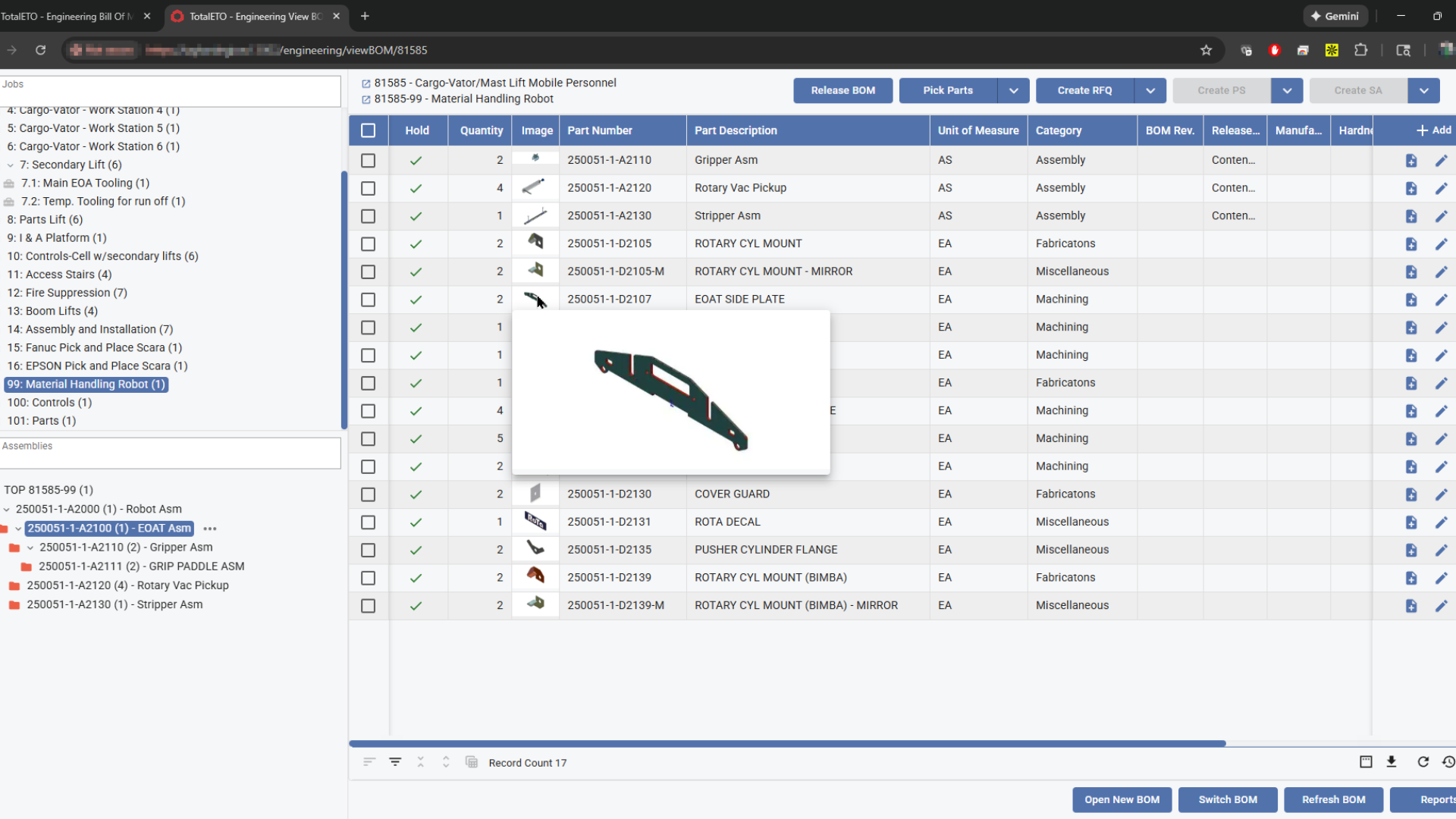
Rather than waiting for engineers to complete the entire design, manufacturers can work with evolving BOMs, releasing information as it becomes available while keeping track of subsequent revisions.
Connecting engineering and ERP systems helps teams communicate changes more effectively across departments, reduce duplicate data entry, and ensure everyone works with the latest information.
CHALLENGE: Procurement and Inventory Management
Managing materials in an ETO environment is fundamentally different from managing inventory for repetitive manufacturing. Since every project is unique, manufacturers may not know their complete material requirements when purchasing begins.
Custom Machine Builders must order some components early because of long lead times. Meanwhile, as engineering progresses, they may revise, replace, or eliminate other components.
This creates several challenges:
- Purchasing materials before the complete BOM is available.
- Identifying which components belong to specific projects.
- Tracking outstanding purchase orders and supplier delivery changes.
- Managing materials affected by engineering revisions.
- Checking whether a project can use existing inventory.
- Avoiding unnecessary purchases and excess inventory.
SOLUTION: Project-specific purchasing and material visibility are especially important in ETO manufacturing.
Rather than treating all materials as general inventory, manufacturers benefit from connecting purchased components directly to the projects that require them. This helps purchasing teams understand material commitments, identify shortages, and track costs against the correct jobs.
It also makes it easier to distinguish between materials purchased for a particular customer project and inventory available for other work.
CHALLENGE: Project Costing and Profitability
In ETO manufacturing, how can you tell if a project will be profitable? This is one of the biggest financial challenges in Engineer To Order manufacturing.
Without accurate, up-to-date project costing, teams may not discover these problems until after they deliver the equipment.
Effective ETO job costing requires manufacturers to track both actual expenses and committed costs throughout the project.
These may include:
- Engineering and design labor.
- Purchased materials and outstanding purchase commitments.
- Fabrication and assembly labor.
- Subcontracted work and outside services.
- Rework and costs associated with engineering changes.
By comparing these costs against the original estimate, teams can identify overruns early and understand what affects project profitability.
SOLUTION: Full-project visibility
Real-time job costing is especially important in Engineer To Order manufacturing, where project costs can change throughout the design and build process. Tracking actual expenses and committed costs as they occur gives manufacturers an accurate picture of project spending before they receive invoices or complete the work. makes it easier to identify budget overruns early, understand where costs are increasing, and take corrective action while there’s still time.
Without real-time visibility, manufacturers may not realize a project is losing money until it’s too late. Real-time job costing helps protect profit margins by giving project managers, engineers, and accounting teams the financial information they need to make informed decisions, manage changes, and keep projects on budget.
For example, if a project has a $150,000 budget and has already incurred $90,000 in actual costs, with another $45,000 committed through outstanding purchase orders, management needs visibility into the full $135,000 commitment – not just the $90,000 already spent.
CHALLENGE: Quality and Rework
Quality control gets tricky when every machine is one of a kind. Unlike manufacturers producing the same product repeatedly, ETO manufacturers often need custom inspections, testing procedures, and quality standards for each project.
And surprises happen. Teams discover that parts don’t fit, they’re working from outdated drawings, suppliers have made mistakes, or equipment doesn’t perform as planned.
That’s where non-conformance reports (NCRs), inspection records, and material traceability come in, helping teams catch problems, communicate fixes, and keep everyone accountable.
Just as important is tracking the cost of those surprises. Rework means extra labor and materials, and if those costs aren’t tied to the project, they can quietly eat away at profits.
SOLUTION: Improve traceability and communication by connecting each department
In Engineer To Order manufacturing, quality issues can lead to costly rework, project delays, and reduced profitability. Total ETO helps manufacturers maintain quality throughout the project by tracking inspections, documenting issues, and managing non-conformance reports (NCRs). Whether a problem originates in engineering, involves a purchased component, or is discovered on the shop floor, teams can record and track the issue in one centralized system.
By connecting quality management with engineering, procurement, and project costing, Total ETO helps manufacturers identify problems earlier and reduce unnecessary rework. Teams can track corrective actions, maintain traceability, and record the time and costs associated with resolving issues. This provides greater visibility into how quality problems affect project budgets and helps manufacturers prevent similar issues on future projects.
The Need for a Company Wide Solution
In ETO manufacturing, teamwork isn’t optional. Engineering, purchasing, manufacturing, and accounting all need to stay in sync, even when they’re working on different stages of the same project.
When information is scattered across spreadsheets, emails, and disconnected systems, things get messy fast. Outdated drawings, missed updates, and duplicate work can quickly turn into expensive mistakes.
The solution? Keep everyone working from the same playbook. Connected systems and real-time project visibility help teams stay informed, react to changes, and keep projects moving without the constant back-and-forth.
Best Practices for Improving ETO Manufacturing Efficiency
Every Engineer To Order project is unique, but that doesn’t mean your processes need to be. The trick isn’t to eliminate customization; it’s to make everything happening behind the scenes run a little smoother.

How ERP Software Supports Engineer To Order Manufacturing
Many traditional ERP systems were developed around manufacturing environments where products, bills of materials, and production requirements are established before work begins.
Engineer To Order manufacturers operate differently.
They need to manage projects where engineering continues after the order is placed, BOMs evolve throughout production, and purchasing and manufacturing activities frequently overlap.
An ERP system designed for ETO manufacturing must accommodate these changing requirements rather than forcing manufacturers into rigid, standardized workflows.
What Should ETO Manufacturers Look for in ERP Software?
ERP software with features that provide insightful and valuable information, including historical data, full project visibility, Dynamic BOMs, and sales estimating info are necessary for growth. A few other features your team will benefit from:
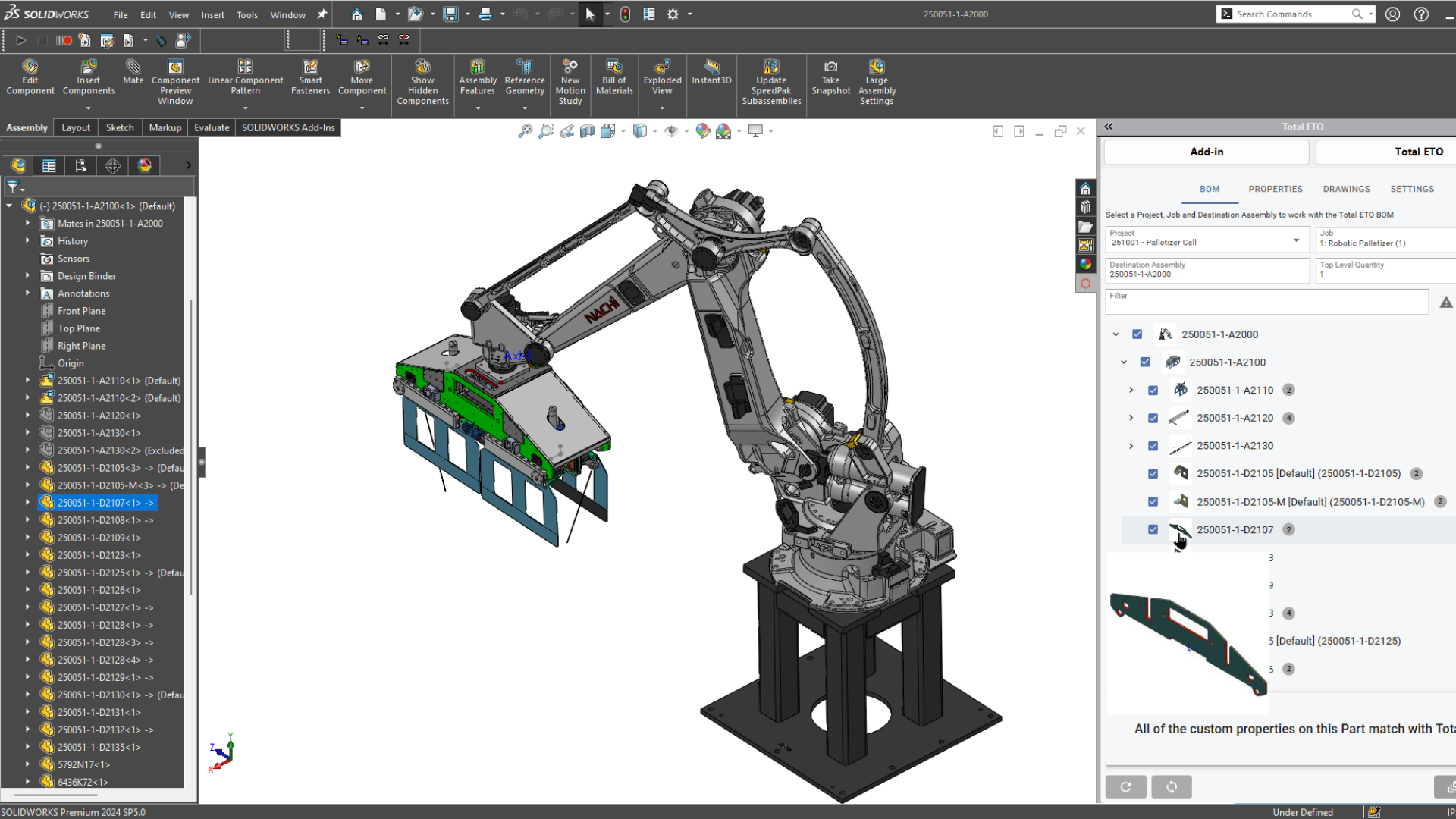
Native 2-Way CAD Integration: When your ERP is connected to SOLIDWORKS or Autodesk Inventor, you drastically decrease administration work required throughout a project, including the double-entry when exporting your BOM… less admin work isn’t just efficienty, it means less opportunity for mistakes.
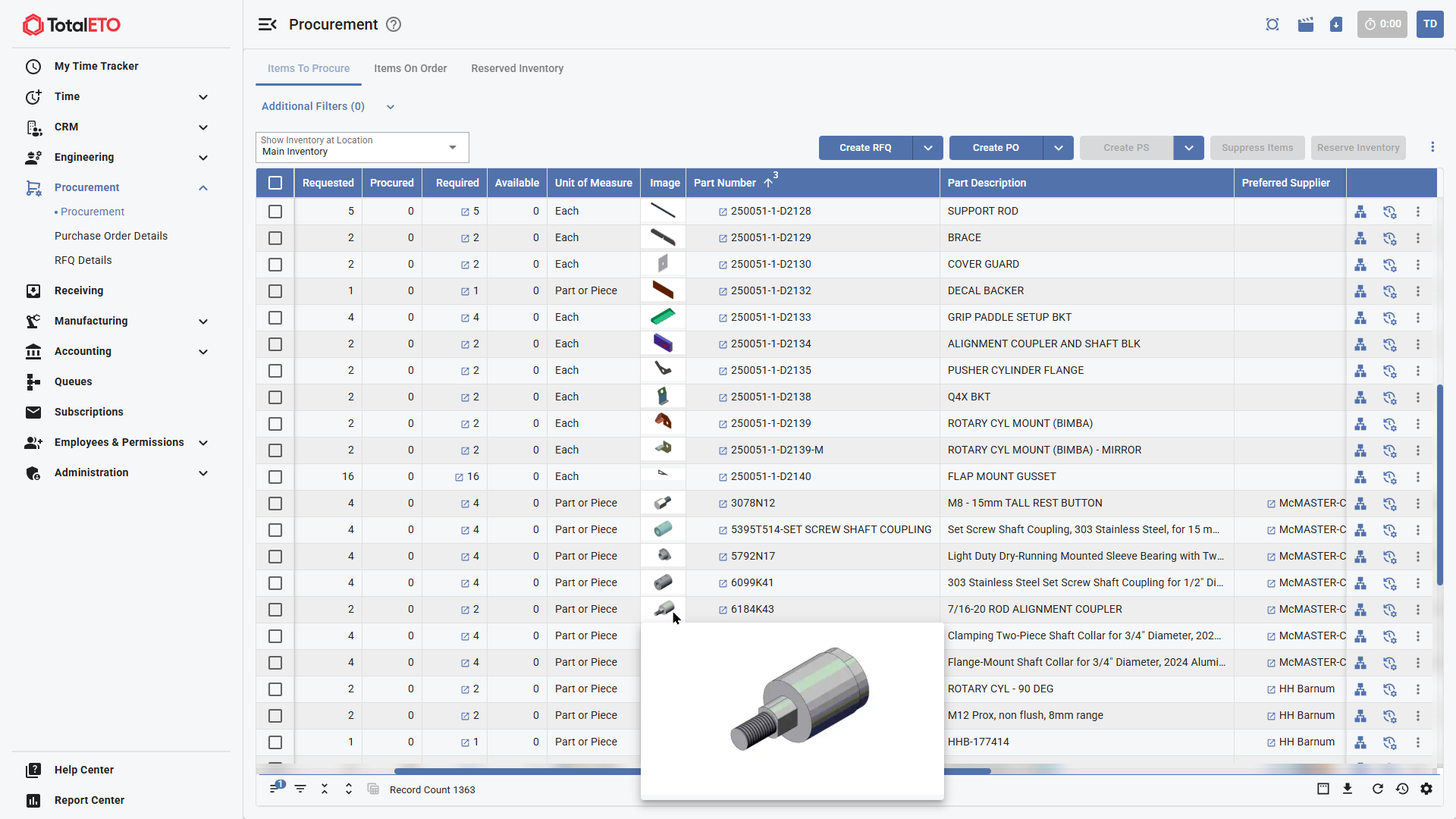
Project-Based Purchasing: Purchasing should be connected to individual projects so manufacturers can track required materials, outstanding orders, and committed costs.
Real-Time Job Costing: Project managers and accounting teams need visibility into actual and committed costs while projects are underway, not just after completion.
Shop-Floor Labor and Material Tracking: Recording manufacturing hours and material usage against specific projects helps manufacturers understand actual production costs and improve future estimates.
Quality Management and Traceability: Inspection records, non-conformance reporting, and component traceability help manufacturers document and address quality issues throughout the project.
Connected Departmental Information: Engineering, purchasing, manufacturing, and accounting should be able to access consistent project information without relying on disconnected spreadsheets and manual updates.
Built Specifically for Engineer To Order: Total ETO!
Total ETO is a fully web-based ERP designed specifically for Engineer To Order manufacturers, including Integrators, Panel Shops, and OEMs. Our software has achieved CMMC level 1 and NIST SP800-171 for our cloud hosting, helping to ensure your operation and data secure.
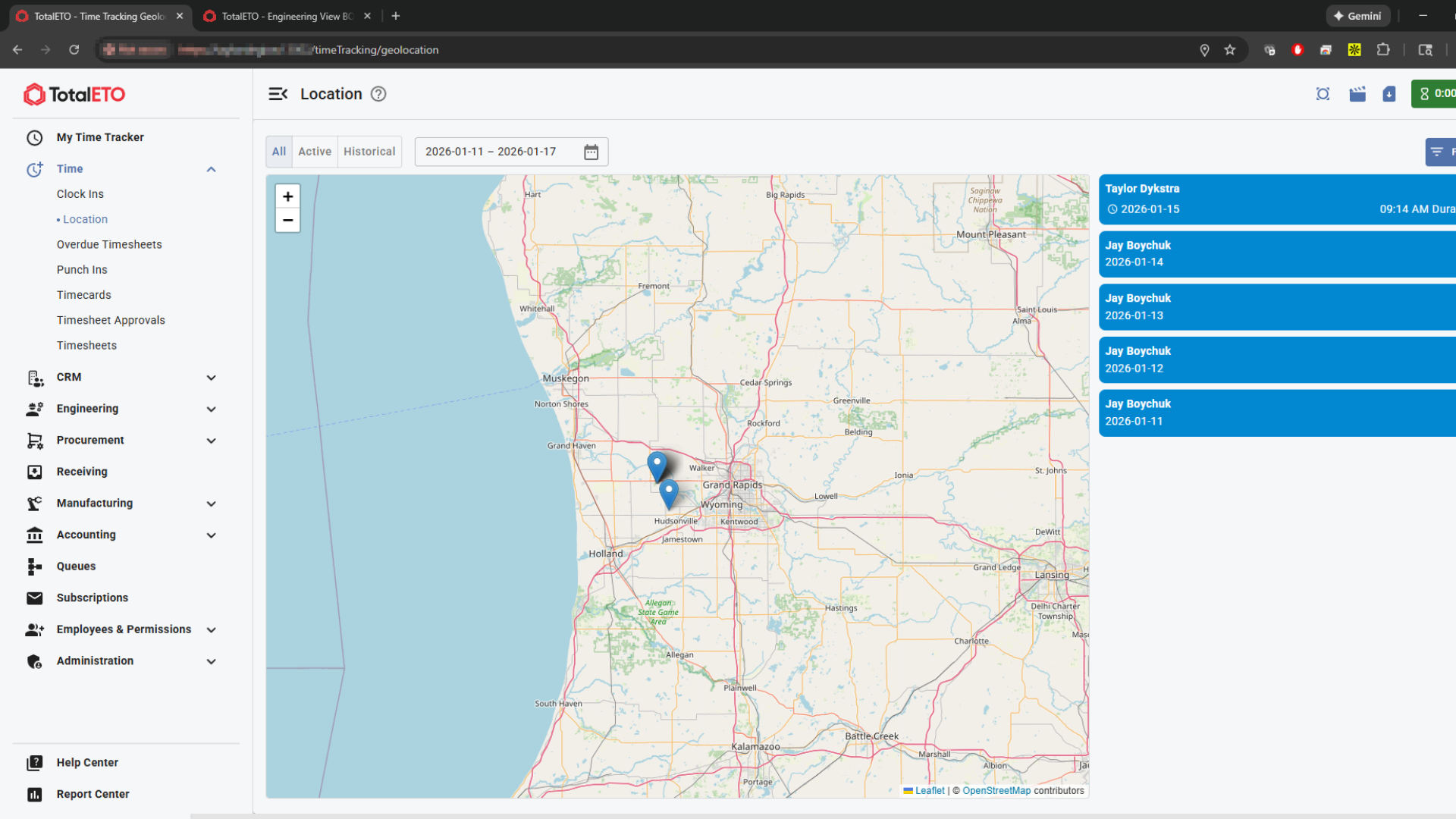
Click to expand each screenshot…
Build Smarter with Total ETO
Engineer To Order manufacturing will always involve changing requirements, complex engineering, and unique production challenges. But managing those challenges shouldn’t require endless spreadsheets, duplicate data entry, or disconnected departments.
By bringing engineering, procurement, manufacturing, and financial information together, Total ETO helps Custom Machine Builders reduce administrative work, improve communication, and maintain better control over complex projects.
Spend less time managing your systems and more time delivering exceptional solutions to your customers.
The Best ERP for ETO, Proven by Other ETO Manufacturers
"Total ETO has been a great fit for our team. It's intuitive, seamless, and helps us stay aligned across every stage of a project."
Steven Coleman, Founding Partner
" Our team is constantly plugged into TotalETO, pulling the reports relevant to them so they understand how projects are moving through and how it's gonna impact them"
Jeremy Wright, President & CoFounder
"Total ETO has been wonderful in helping Rota grow and stay organized with projects. A must for machine builders. TETO is rapidly updating and improving"
Dan Berghorst, Director of Manufacturing Machinery